
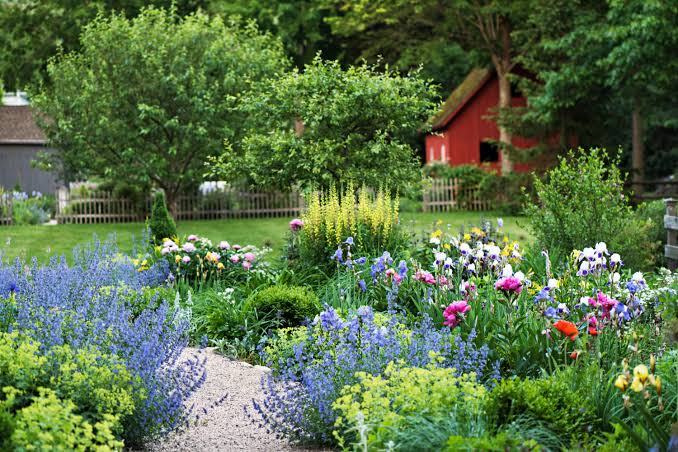
A flower bed can slowly become overcrowded even when every plant started with adequate room. Mature perennials spread, shrubs widen, seedlings appear, and enthusiastic planting fills the remaining gaps.
Crowded flower beds may receive less airflow and sunlight at lower levels, while neighboring roots compete for moisture and nutrients. Selective thinning can restore balance without stripping the bed bare.
Identify Which Plants Are Actually Crowded
Plants touching each other are not automatically a problem. Many garden designs intentionally allow foliage to overlap slightly.
Concern begins when vigorous plants bury smaller neighbors, stems become weak from reaching for light, maintenance becomes difficult, or mature plants repeatedly grow beyond the available space.
Check mature size rather than judging only by spring growth. A bed that appears open early in the season may become tightly packed once summer foliage reaches full size.
Decide What Should Stay Before Moving Anything
Choose the plants that provide the strongest structure, healthiest growth, longest seasonal interest, or most useful coverage. Those become the anchors of the bed.
Broader home landscaping ideas can offer visual inspiration, but an overcrowded bed benefits from a practical inventory first. Mark plants you want to keep, relocate, divide, or remove before digging begins.
Divide Spreading Perennials When Appropriate
Many established perennials can eventually form large clumps. Dividing suitable plants can create more breathing room while giving you additional plants for another area.
Timing and technique depend on the species. Some plants tolerate division readily, while others prefer to remain undisturbed.
Create Space Around Plants That Need It Most
Remove weak volunteers, unwanted seedlings, and plants that no longer suit the bed. Then address aggressive spreaders that repeatedly move into neighboring crowns.
Planning a calmer arrangement through garden layout inspiration can help you decide where relocated plants should go. Avoid solving overcrowding by moving every excess plant into another already full bed.
| Crowding Sign | What It Suggests | Possible Response |
|---|---|---|
| Smaller plants disappearing | Taller growth dominates | Thin or relocate neighbors |
| Dense perennial clumps | Plants have expanded | Divide suitable species |
| Tangled maintenance access | Too little working room | Open small access gaps |
| Repeated self-seeding | Excess volunteers | Thin seedlings early |
Use Empty Space as Part of the Design
Gardeners sometimes feel every piece of exposed soil must be covered. That instinct can recreate crowding immediately after thinning.
A little separation can make individual forms easier to appreciate and provide access for pruning, weeding, and watering. References focused on decorative outdoor design can help with visual composition, but plant health should determine the final spacing.
Mulch can give temporarily open sections a finished appearance while plants settle into their revised positions.
Don’t Remove Plants Simply Because the Bed Looks Full
Cutting out large amounts of healthy growth at once can leave a mature garden looking unnecessarily sparse. It may also expose previously shaded soil to stronger sun and faster drying.
Work selectively. Remove obvious excess first, then watch how the remaining plants respond through the growing season. A crowded bed often needs editing rather than complete redesign.
Frequently Asked Questions
How do I know when a flower bed is overcrowded?
Look for plants being hidden by neighbors, reduced flowering, tangled stems, poor access, repeated competition for light, or mature plants growing far beyond their intended space.
Can I move flowering plants during the growing season?
Some plants tolerate relocation better than others, and timing matters. Moving plants during cooler conditions often reduces stress, but species-specific requirements should guide the decision.
Should flower beds have visible gaps between plants?
Small gaps are not a problem. They can improve access and allow plants to reach mature size without immediately competing with neighboring growth.
Edit the Bed Instead of Starting Over
Begin with the plants worth preserving, then remove or relocate the growth that interferes with them. Give mature sizes more weight than temporary empty spaces. A flower bed usually becomes healthier and easier to enjoy when every plant has enough room to show its natural shape.