
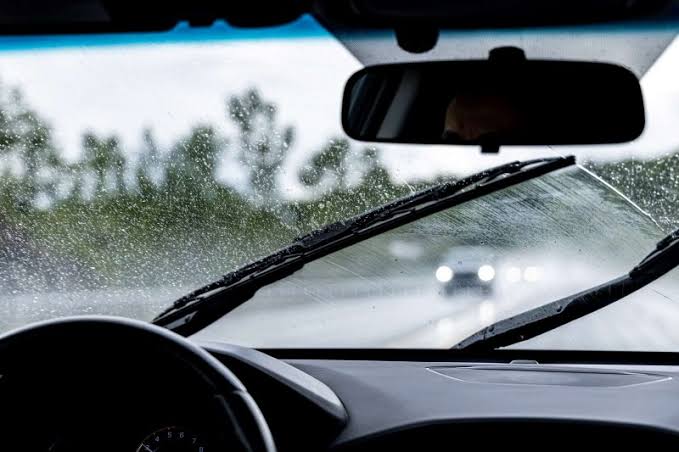
Rain changes traction, visibility, braking distance, and the way other vehicles behave around you. Worn wipers can leave a smeared windshield, weak tire tread can struggle with standing water, and poor lighting can make your vehicle harder to see. Checking those three areas before departure gives you a much better starting point for wet-weather travel.
Make Visibility the First Priority
Replace wiper blades that chatter, skip, streak, or leave broad areas uncleared. Fill the washer reservoir and clean the windshield inside and out. Drivers reviewing wet-weather vehicle checks should also confirm that low beams, brake lights, and turn signals work correctly.
Use Lights to Help Others See You
Headlights are not only for helping you see the road. During heavy rain, they make your vehicle easier for surrounding drivers to identify.
Avoid relying entirely on automatic lighting systems. Some vehicles may illuminate daytime running lights without activating the rear lights, so confirm what your specific vehicle is doing.
Give the Tires Enough Room to Work
Tires need tread depth and proper inflation to move water away from the contact patch. Worn tires become more vulnerable to hydroplaning, especially as speed increases or water collects in wheel tracks.
People comparing automotive troubleshooting resources should remember that wet handling problems are not always caused by alignment or suspension faults. Tire condition, road water, speed, and pressure can change the vehicle’s behavior dramatically.
| Wet-Weather Problem | Driver May Notice | Better Response |
|---|---|---|
| Poor wipers | Smearing or skipped areas | Replace blades |
| Low tire grip | Light or vague steering | Slow down gradually |
| Standing water | Sudden loss of traction | Avoid sharp inputs |
| Heavy spray | Reduced forward view | Increase following distance |
Slow Down Before Grip Disappears
Hydroplaning occurs when the tires lose effective contact with the road because of water. If steering suddenly feels unusually light, ease off the accelerator and avoid abrupt braking or steering movements.
General trip preparation reading can help with scheduling, but wet-weather timing deserves its own margin. A route that normally takes three hours may require more time once traffic slows and visibility drops.
Leave extra following distance. Even if your tires are in good condition, the vehicle ahead may brake suddenly after hitting deep water or losing visibility.
Rainy-Weather Mistakes to Avoid
Cruise control can be convenient on dry highways, but many drivers prefer direct throttle control in heavy rain because road conditions can change quickly. Smooth manual adjustments make it easier to respond to standing water or sudden loss of grip.
Another mistake is driving through water without knowing its depth. Flooded roads can hide potholes, moving water, debris, or deeper sections than expected. Turning around is often a better option than testing an uncertain crossing.
Frequently Asked Questions
What should I do if my car starts hydroplaning?
Ease off the accelerator, keep the steering as steady as possible, and avoid hard braking. Once the tires regain firm contact with the road, make smooth steering or braking corrections as needed.
Are new wiper blades worth replacing before a long rainy trip?
Yes, if the existing blades streak, skip, chatter, or fail to clear the windshield cleanly. Good wipers can make a large difference during heavy spray, darkness, and changing rainfall intensity.
Should tire pressure be changed specifically for rain?
Use the pressure recommended by the vehicle manufacturer rather than changing it simply because rain is expected. Correct inflation supports predictable handling and allows the tire tread to work as designed.
Give Wet Roads More Respect
Rain rarely creates one single problem. It reduces visibility, changes traction, lengthens stopping needs, and makes traffic less predictable at the same time. Check the wipers, tires, and lights before leaving, then reduce speed and increase following distance once conditions worsen. Smooth inputs and extra time are far more useful than trying to maintain a normal dry-road pace.