
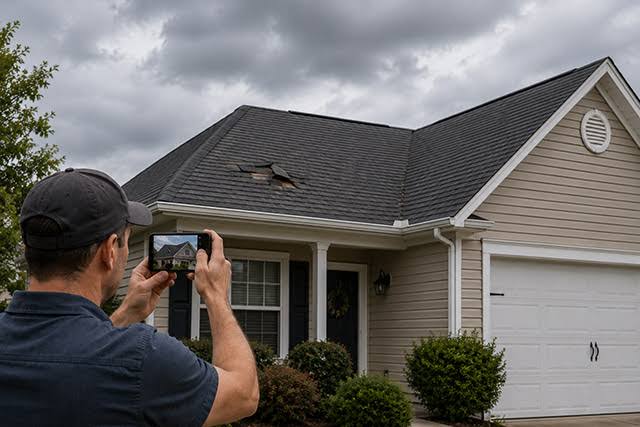
Storm damage rarely stays frozen in time. Water moves, branches are removed, temporary roof coverings go up, and contractors begin emergency work. That changing scene makes early documentation important. A strong record can show what the property looked like immediately after the event and distinguish original storm damage from later deterioration or repair activity.
Capture the Property in Context
Start with broad photographs showing the building and surrounding area. Then document individual problems such as missing roofing materials, damaged siding, broken windows, fallen trees, interior water staining, and affected contents.
Do not climb onto an unstable or wet roof simply to get better photographs. Safety takes priority over claim documentation.
NAIC consumer guidance recommends making a list of damaged property when preparing a homeowners claim. NAIC Content
Include Dates and Locations
A folder containing hundreds of unidentified images can become confusing. Organize photographs by room, building section, or date.
Where possible, preserve the original digital files because their metadata may help establish when images were created.
Prevent Additional Loss Without Erasing the Evidence
Property owners generally need to act reasonably to prevent further damage, but emergency protection should be documented before and after it occurs.
For example, photograph a damaged window before boarding it or a roof opening before installing a temporary covering. Save invoices and descriptions of emergency work.
People already organizing important ownership records may use estate-related legal directories for unrelated planning matters. Insurance evidence should still have its own file so claim materials do not become mixed with general legal paperwork.
| Storm Record | What to Capture | Practical Value |
|---|---|---|
| Exterior photos | Roof, siding, trees | Shows overall event |
| Interior photos | Water and contents | Documents resulting loss |
| Weather records | Date and location | Establishes event context |
| Repair invoices | Emergency work | Tracks expenses |
Compare the Damage With the Policy
A storm occurring at the same time as property damage does not automatically establish that every repair is covered. Policies may contain exclusions, deductibles, limitations, and definitions affecting payment.
Read the declarations page, coverage form, endorsements, and deductible information. The NAIC notes that the declarations page typically identifies policy limits, effective dates, insured property, and other important coverage information. NAIC Content
For general policy education, the NAIC homeowners insurance information center explains common coverage concepts and consumer resources. NAIC Content
Keep Different Disputes Separate
One dispute might involve whether the storm caused the damage. Another might concern repair cost, depreciation, matching materials, or the amount of the deductible.
Combining every disagreement into one vague complaint makes the problem harder to analyze. Write down each disputed issue separately and connect it to the relevant policy language or estimate.
General family law reading resources may exist alongside household paperwork, but unrelated materials should not be used to suggest authority on insurance coverage questions.
Create a Communication Timeline
Record when the storm occurred, when the insurer was notified, when inspections happened, when estimates were received, and when additional documentation was requested.
If the dispute becomes substantial, insurance attorney directories can be one starting point for identifying legal professionals, while state insurance regulators may also provide consumer complaint information.
Preserve Competing Estimates
If an insurer’s estimate differs from a contractor’s estimate, keep both. Compare the actual line items rather than focusing only on the bottom-line totals.
Differences may come from repair scope, labor assumptions, quantities, materials, or items one estimate includes and the other omits.
What Property Owners Often Misread
A dramatic storm does not prove that every later defect came from that storm. Older deterioration, maintenance problems, and pre-existing damage may become part of the adjustment discussion.
The opposite mistake is assuming a denial or low estimate must be correct without reading the reasoning. Ask for explanations in writing and compare them with the policy and physical evidence.
When Should You Escalate the Dispute?
Consider additional assistance when the insurer and property owner disagree substantially about the cause of damage, major portions of a claim are denied, deadlines are approaching, or policy language is difficult to interpret.
A state insurance department, licensed claims professional, or attorney may be appropriate depending on the issue. Avoid making permanent repairs solely to strengthen a dispute before required inspections are complete.
Frequently Asked Questions
Are photographs enough to prove storm damage?
Photographs are useful evidence, but a claim may also involve inspections, weather information, repair estimates, maintenance history, policy language, receipts, and expert opinions depending on the dispute.
Should I photograph damage after temporary repairs too?
Yes. Before-and-after images help show both the original condition and what was done to prevent additional loss.
What if my contractor and insurer disagree?
Ask both sides for detailed written estimates or explanations. Comparing individual repair items can reveal whether the disagreement concerns scope, price, materials, causation, or another issue.
Build the Timeline While Evidence Is Fresh
Storm disputes become more difficult when photographs are missing and nobody remembers exactly when repairs occurred. Preserve the original condition, document temporary work, and keep a dated claim timeline. Clear records cannot guarantee coverage, but they make the actual disagreement easier to identify and address.
This article provides general insurance and legal information and is not a substitute for advice from a licensed insurance professional or attorney.