
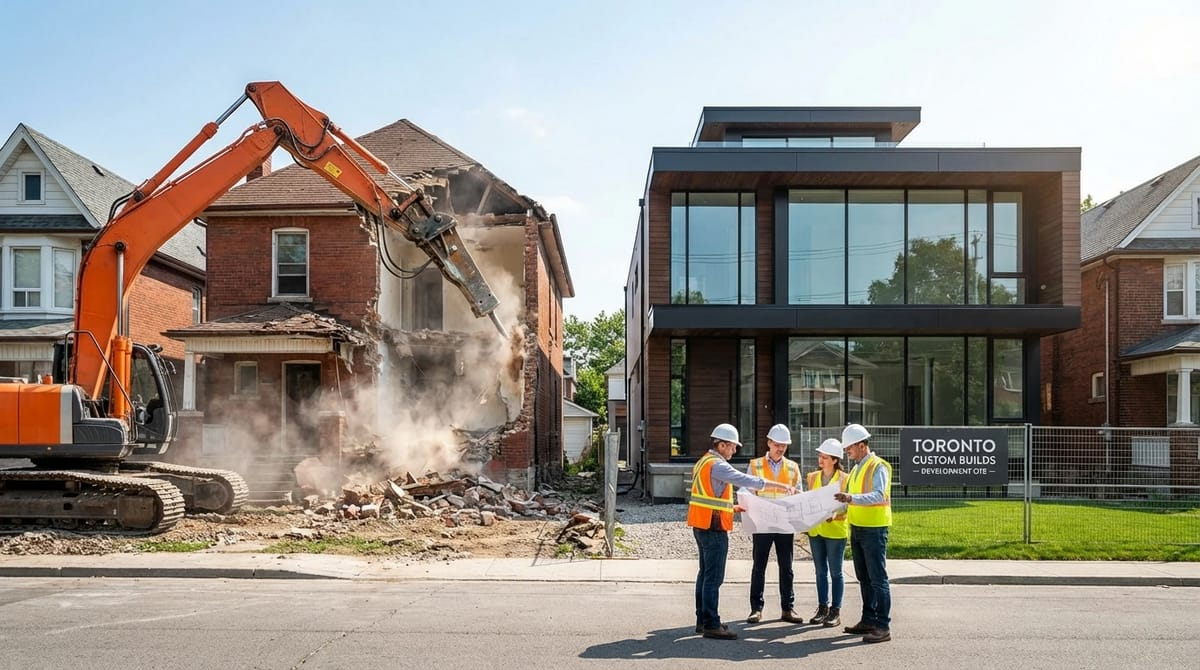
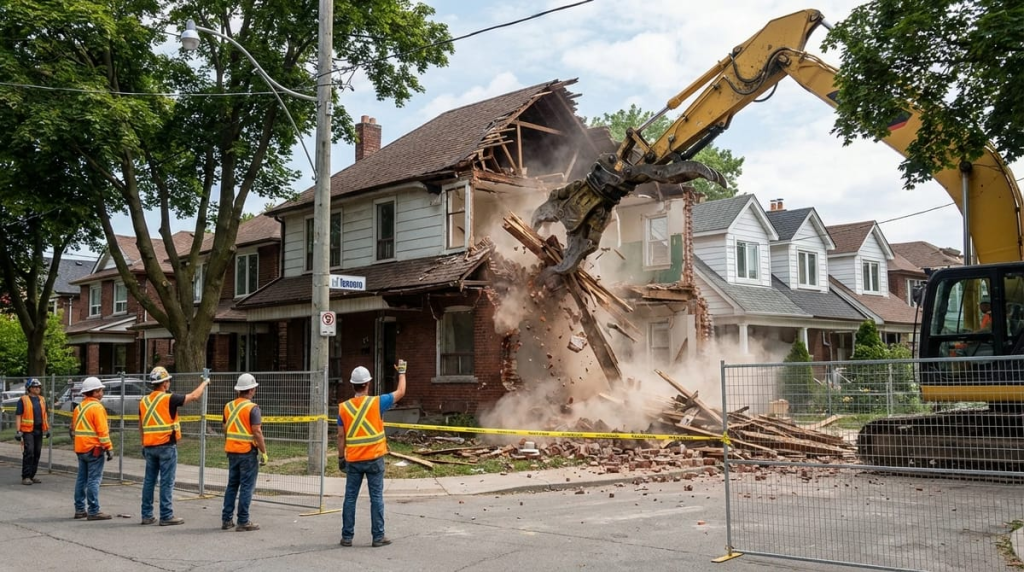
Demolishing a house to build a custom home in Toronto is an exciting step for homeowners who want full control of their design, layout, and long term property value. However, Toronto is a complex jurisdiction with a layered permit system, unique zoning bylaws, environmental considerations, and premium construction timelines. Before a single wall comes down, homeowners must understand the legal framework, costs, site preparation steps, and the strategic role that an experienced builder plays. This guide explains every major requirement so that you can begin demolishing a house to build a custom home in Toronto with clarity and confidence.
Understanding Toronto’s Demolition Permit Requirements
In Toronto, securing a formal demolition permit from the Building Division is a mandatory first step. The city only issues this permit if you provide proof of ownership, a site plan, confirmation of utility disconnections, and a commitment to rebuild. If the property involves heritage assets or protected trees, additional environmental or clearance reports are required. Crucially, this permit authorizes only the demolition process; a separate building permit is required to begin constructing your new custom home. Because processing times vary based on location and seasonal demand, early submission is essential to avoid project delays.
Key Documents Required for Demolition in Toronto
To streamline your application and avoid costly delays, ensure you prepare the following documents in advance:
- Completed demolition permit application form submitted to Toronto Building.
- Survey of the existing property boundaries.
- Site plan showing the structure to be demolished and surrounding features.
- Utility disconnection letters from gas, water, and electrical providers.
- Proof of building ownership.
- Commitment to rebuild form signed by the property owner.
- Heritage documentation if applicable.
- Arborist report for lots with protected trees.
- Engineer’s report for complex structures or partial demolitions.
- Waste disposal and recycling plan for demolished materials.
This combination of technical and administrative documents ensures the city can verify that the demolition will be safe, compliant, and environmentally responsible.
Toronto Zoning Rules That Influence Demolition and Rebuilding
Every custom home project in Toronto must comply with Zoning By‑law 569‑2013, which regulates everything from building height to lot coverage and setback distances. Before demolition, your builder or architectural team should complete a zoning review to confirm whether the new design meets these requirements. If it does not, you must apply for a minor variance through the Committee of Adjustment.
Toronto zoning rules can affect:
- How large your new custom home can be.
- How close the structure can be to neighboring properties.
- Whether you can add a secondary suite.
- Maximum allowable height for your building type.
- Lot coverage percentages, which determine how much of the land can be built on.
Custom homes often push for expanded footprints or higher ceilings, which can trigger variance applications. These applications add time and require public notification, which means neighbors can voice concerns. A well prepared zoning strategy reduces friction and keeps your project moving.
Estimated Costs of Demolishing a House in Toronto
The cost of demolition varies based on property size, environmental risks, accessibility, and material disposal requirements. Below is a general breakdown of common demolition related expenses in Toronto.
| Cost Category | Typical Price Range (CAD) | Notes |
| Full House Demolition | 18,000 to 45,000 | Based on size, complexity, and density of the neighborhood |
| Partial Demolition | 8,000 to 25,000 | Often used when preserving foundations or structural walls |
| Asbestos Testing | 500 to 2,000 | Required for structures built before 1990 |
| Asbestos Removal | 3,000 to 15,000 | Cost varies based on amount and location |
| Utility Disconnections | 2,000 to 5,000 | Electricity, gas, water, and sewer |
| Tree Protection and Permits | 500 to 4,000 | Required for protected species or boulevard trees |
| Site Grading and Clean Up | 3,000 to 10,000 | Prepares the land for new construction |
| Waste Disposal Bins | 600 to 1,500 per bin | Multiple bins often required |
| Engineering and Permit Fees | 3,000 to 7,000 | Demolition permit, surveys, engineering documents |
These figures represent typical Toronto conditions. Complex sites with limited machinery access or older homes with hazardous materials will fall at the higher end of the range.
Environmental and Safety Considerations
Toronto enforces strict environmental and safety rules for demolition sites. Homeowners and builders must take precautions to protect workers, neighbors, and the surrounding environment. Key considerations include:
- Hazardous Material Testing
Older homes often contain lead paint, vermiculite insulation, mold, or asbestos. These materials require licensed remediation professionals.
- Dust and Noise Control
Demolition generates dust that can affect neighboring properties. Water dampening systems and protective barriers are often required.
- Tree Protection Mandates
Toronto Urban Forestry enforces strict rules for any tree with a diameter of 30 centimeters or more measured at 1.4 meters above ground. Removal or damage can result in substantial fines.
- Safe Debris Disposal
Demolition waste cannot be dumped without separation. Materials such as brick, concrete, lumber, metal, and drywall must be sorted and disposed of properly.
- Public Safety and Site Fencing
Secure fencing, signage, and controlled access points are required. Pedestrian safety is a priority in high density Toronto neighborhoods.
These environmental measures help maintain safety and reduce impact on surrounding communities.
How Long Does Demolition Take in Toronto?
The duration of demolition depends on permit clearance, site preparation, remediation needs, and the scale of the structure. On average, the physical demolition of a standard detached Toronto home takes three to seven days. However, the total timeline from planning to completion can extend significantly.
Permit approval may require several weeks. Hazardous material removal, tree protection coordination, and utility disconnection each introduce additional steps that affect scheduling. Weather conditions can also cause delays, particularly in winter when ground frost affects machinery access and waste transportation.
Once demolition is complete, the lot must be cleared, leveled, and inspected before construction permits are released. The timeline for demolition and site preparation often ranges from four to ten weeks. Homeowners should coordinate closely with their builder to ensure that demolition work does not stall the beginning of the construction phase.
Choosing the Right Demolition and Custom Home Builder
Selecting the correct professional team is one of the most important decisions in the entire process. Look for builders who offer expertise in:
- Toronto permit management and city communication.
- Full service demolition and site preparation.
- Engineering and structural assessments.
- Temporary utility capping and disconnection coordination.
- Custom home architectural design and zoning compliance.
- Construction cost planning and timeline control.
- Neighborhood relations and complaint mitigation.
- Environmental safety and waste management.
- High quality craftsmanship for the rebuilding phase.
Route Homes specializes in guiding clients through every step, from demolition permit applications to the final handover of a fully custom built Toronto home.
Preparing Your Property for Demolition
Property preparation begins long before machinery arrives. Homeowners must remove personal belongings from the house and confirm that all utilities have been professionally disconnected. Insurance coverage should be reviewed to ensure that demolition is included and that liability coverage is updated to reflect construction related risks.
The contractor will install perimeter fencing, signage, erosion control measures, and temporary access routes. If the site has limited frontage, additional planning may be needed to accommodate heavy equipment or waste bins. In many Toronto neighborhoods, street occupancy permits are required for equipment staging. These must be obtained in advance to avoid delays.
Another important step is communicating with neighbors. While not a legal requirement, it is a courteous practice that minimizes complaints. Demolition can be loud and disruptive. Notifying neighbors of timelines and expected noise can prevent misunderstandings and foster good relations.
Timeline Coordination for Demolition and New Construction
Coordinating demolition with the construction schedule is vital for keeping the project on budget. Homeowners should be aware of the following planning steps:
- Permit Synchronization
Ensure demolition and building permit timelines are aligned so that construction can begin immediately after site clearance.
- Foundation Planning
Decide whether the existing foundation will be reused or replaced. This affects the demolition scope.
- Bin and Equipment Scheduling
Waste disposal bins must be scheduled in advance, especially during peak seasons when demand increases.
- Weather Adjustments
Rain or winter frost can delay equipment mobilization, grading, and debris removal.
- Inspections
The city requires specific inspections after demolition is complete. These must be passed before construction proceeds.
Background coordination reduces costly idle time and accelerates the transition from demolition to custom home construction.
Rebuilding: What to Expect After Demolition
Once the site has been cleared and inspected, the custom home building process can officially begin. This stage involves excavating for the foundation, pouring concrete, framing the structure, installing mechanical systems, and finishing the interior and exterior aesthetics. Homeowners typically work closely with the builder to finalize design choices, material selections, and timelines.
The advantage of demolishing and rebuilding is the opportunity to design a fully modern, energy efficient, and highly functional home tailored to your lifestyle. New builds benefit from superior insulation, upgraded electrical capacity, advanced HVAC systems, and optimized layouts that older homes cannot accommodate without extensive renovation.
Toronto custom homes also have strong resale value. Modern construction appeals to buyers, and homes built to current code standards often outperform older structures in durability, efficiency, and long term maintenance costs. A qualified builder ensures that every stage from demolition to finishing is aligned with city requirements and industry best practices.
Conclusion
Demolishing a house to build a custom home in Toronto is a major investment in comfort, lifestyle, and long term property value. With the right permits, zoning preparation, safety measures, environmental considerations, and professional support, the process becomes a smooth transformation rather than a logistical challenge. Understanding what is required before demolishing a house to build a custom home in Toronto allows homeowners to plan effectively and begin the building phase with confidence and clarity.
FAQ
- Do I need a separate permit if I want to keep the existing foundation?
Yes. Partial demolitions require different structural assessments and approvals. The city needs engineering documentation proving that the remaining foundation is structurally sound.
- What Toronto bylaw governs noise during demolition?
Noise rules are enforced under Toronto Municipal Code Chapter 591. Construction noise is typically restricted to daytime hours, often 7 a.m. to 7 p.m. on weekdays.
- Can demolition begin before utility disconnections are complete?
No. Gas, water, and electrical utilities must be fully disconnected and confirmed in writing by the respective providers.
- Are neighbors notified by the city before demolition begins?
Not usually. However, homeowners or builders often notify neighbors voluntarily to maintain good relations.
- What happens if the property contains a protected heritage feature?
Additional applications and heritage impact assessments are required. Demolition may be delayed or restricted depending on the heritage designation.