

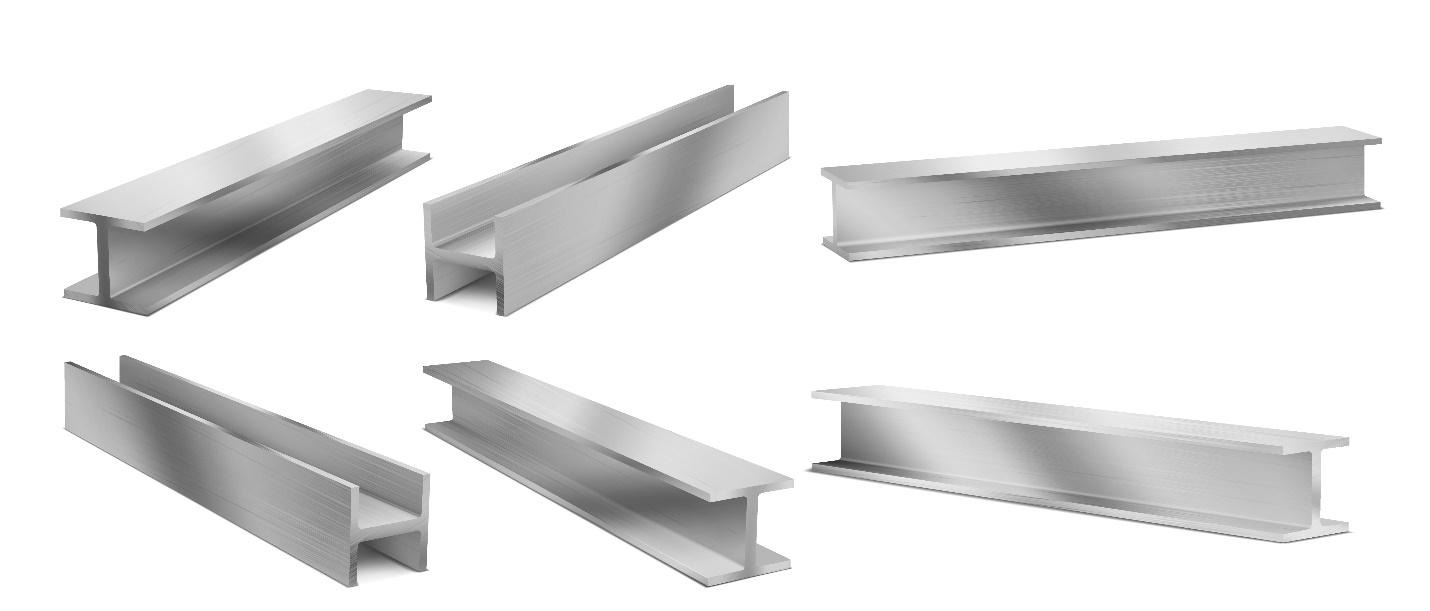
Metal angles (also known as steel angles) are used in almost all kinds of construction projects. If you’ve ever bolted a shelf or stabilized a frame, chances are you’ve used this simple yet amazingly efficient tool.
Here, we’ll be explaining what it actually is and how it is used for different purposes.
What Is a Metal Angle?
A metal angle is a steel piece that is manufactured at a 90-degree angle. It forms an L shape, so it has two perpendicular legs. The shape is simple and widely used in construction and engineering projects that require steel. These pieces are made by bending or hot-rolling the steel, which results in a right angle that resists bending (when used as supports).
Their strength-to-weight ratio is second to none, meaning they can support a high load without a problem. One leg touches the surface while the other leg provides vertical support.
Types of Metal Angles
These angles have two primary forms: equal and unequal. The first type is fully symmetrical and has legs of the same length (like the sides of an L).
In unequal angles, we have legs of different lengths that can be used in certain circumstances. Equal angles are used to get balanced corner support, as each side supports the load equally. Unequal ones are used when one leg is attached to a surface, and the other leg serves as a support.
For example, an unequal angle will work best if you’re supporting a shelf along the wall. Equal angles are good when you want to reinforce a square corner. They’re also used as a primary backbone for sheds and wall framings.
Benefits of Metal Angles
Their strength-to-weight ratio is what makes them an obvious choice for builders and engineers. Once the L shape is fixed in place, nothing can bend it. They’re also amazingly versatile as they come in a range of sizes. You can also easily cut or drill them. This is also why they’re used across a range of industries, including manufacturing, construction, transportation, and agricultural equipment.
Despite their extraordinary utility, they’re still very much affordable. Compared to other sophisticated brackets, they’re way cheaper per length. Their costs are low because they’re mass-produced from standard steel.
Common Applications of Metal Angles
On the roof, these angles form the skeleton for walls and roof trusses. Similarly, metal angles are also embedded in concrete to boost tensile capacity. Similarly, they are also used to construct pedestrian walkways.
When it comes to warehouse racking, engineers use it to build heavy-duty industrial storage racks and pallet shelves. In vehicles, they make up the chassis and structural undercarriages. They also act as strong internal frames for everyday appliances. In residential settings, metal angles are commonly used for DIY projects such as gates and awnings.
Bottom Lines
These metal angles have been a critical building block for a century. They have a simple shape and low weight, but they offer a level of strength hard to match by other similar materials.